GAME I
Scores
King - Cormac = 80
Lord - Caleb and Mike = 28
Knights - Scott, Jaeha, Andrew, Jason = 16
Peasants = 4
THINKING - Think Pair Share
Who was the winner?
Who did the work?
Where did the wealth accumulate?
Was it fair?
Who had the power?
Who made the rules?
How were people rewarded?
Journal Thinking - Writing
If I lived in the Middle Ages I would have wanted to be
a lord, a knight, a King, a peasant
BECAUSE...
How many reasons can you think of?
I wouldn't want to be a ...
BECAUSE
How many reasons can you think of?
I think that the feudal system was (fair or unfair)
BECAUSE
How many reasons can you think of?
Showing posts with label Middle Ages. Show all posts
Treason and Torture
Middle Ages - Crime and Punishment
Treason:
was the crime of betraying one's country, especially by attempting to kill or overthrow the sovereign (King) or government.
Torture:
methods used to hurt people to make them admit to a crime (that they might not have done).
Methods of torture inflicted great pain to force people to confess!
Timeline Research
To help you find out the dates of events in the past for your History Timeline -
Investigate these interactive timelines
Just click on the image below - remember to make some notes in your journal so that you can use the information you find on your own timeline.
You need to add between 10 and 20 dates to your timeline with a title and a small icon or picture to show the event
Medieval Europe
Ancient Egypt
Barter
Bartering was a way of exchanging / swapping goods instead of using money. This was a common way of trading back in the middle ages. For this to work each person needed to agree on what would be a fair trade or swap.
Take a look at these pictures
then
Create your own visual notes in your learning journal to show this idea
Use the checklist grid to decide on what you think would be a fair exchange for some common items.
Medieval Europe: Feudalism
Learning about the way that society was organised in the middle ages.
Feudalism was a hierarchy system that worked by rewarding people who were loyal to the King by providing them with land.
Key message = Loyalty for Land
Watch these videos and make some notes of the key points and important topic words.
Skip through bits of this video to get the main ideas about Feudalism.
Lego Feudalism!
Middle Ages Clothing
Investigate the clothing worn by different people in the Middle Ages
Start with a...
Google Images Search
peasants clothing
knights armour
middle ages nobles clothing
In your journal write five or more questions about Middle Ages clothing that you would like to find the answer out to.
Investigate these links to find out the answers to your questions.
Recreate a miniature item of clothing for your Artefact Box.
Create a small fact file of information to go with your artefact.
Start with a...
Google Images Search
peasants clothing
knights armour
middle ages nobles clothing
In your journal write five or more questions about Middle Ages clothing that you would like to find the answer out to.
Investigate these links to find out the answers to your questions.
Make some notes in your journal for a fact file about your selected clothing / person
Recreate a miniature item of clothing for your Artefact Box.
Create a small fact file of information to go with your artefact.
Fact File Example - click to enlarge
Illuminated Letters
In the Middle Ages books were all made by hand.
Books were hand written - not printed.
Religious books were the most common and many of these were copied out by monks.
Many people could not read and books were very valuable items.
Illuminated letters were used as a special decoration in books to add importance and interest.
Read and discover information about the meaning and purpose of illuminated letters.
Reading Link
Book History Timeline
Illuminated Letters
Research and find examples of illuminated letters on the internet.
Google images search "illuminated letter .... a, b, "
Use one of your initials for your own illuminated letter design to be added to your artefact box.
Create your own illuminate letter
Have a look at these designs:
Books were hand written - not printed.
Religious books were the most common and many of these were copied out by monks.
Many people could not read and books were very valuable items.
Illuminated letters were used as a special decoration in books to add importance and interest.
Read and discover information about the meaning and purpose of illuminated letters.
Reading Link
Book History Timeline
Illuminated Letters
Research and find examples of illuminated letters on the internet.
Google images search "illuminated letter .... a, b, "
Use one of your initials for your own illuminated letter design to be added to your artefact box.
Create your own illuminate letter
- divide a new journal page into 4 and sketch out some ideas for your letter design
- include a border with symbols, icons or patters and designs
- add designs inside or around your letter too
- colour with strong contrasting colours or use a selection of tones
- choose between a crayon and dye effect or pen, pencil and felt pens
- finish off by using a puffy paint / glue to make the outline of your letter stand out
Have a look at these designs:
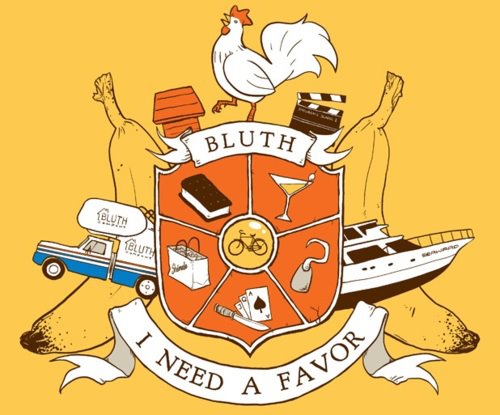
Coat of Arms
A coat of arms is a unique heraldic design on a shield, escutcheon, surcoat, or tabard. A coat of arms is used to cover, protect, and identify the wearer. Thus the term is often stated as "coat-armour", because it was anciently displayed on the front of a coat of cloth in European societies.
A Coat of Arms or Family Crest has long been a symbol of a family's identity and values. Originally used to identify warriors dressed in armor, each knight chose symbols and colours to represent his family or clan. These family crests or coats of arms have been passed down throughout generations.
However, most of us are not directly connected with these ancestors, or the symbols of yesteryear are not representative of who our family is today.
You can make your own personal family crest based on the values and activities that are important to you and your family.
Step 1. Investigate these web sites and gather information and ideas about possible designs.Coat of Arms Ideas
Design a Coat of Arms
Create a Coat of Arms
Step 2. In your journal start planning your ideas by taking note of the design ideas you like.
Shield Shape x3 ideas
Divisions x3 different ideas
Colours that have some meaning for you
Icons and images that represent you and your family - you could include elements of a flag, a sport, an animal to represent a value eg. lion for bravery. You could include everyday objects to show what you do eg. a pen, a knife and fork, a computer, a lego brick
A Motto - a short saying or three or four important values words
Do a sketch of your coat of arms in your journal using different combinations of ideas from your notes.
Take a look at these for even more ideas...
Subscribe to:
Posts (Atom)